Copyright, Fair Use, & Creative Commons
Section 1: Introduction
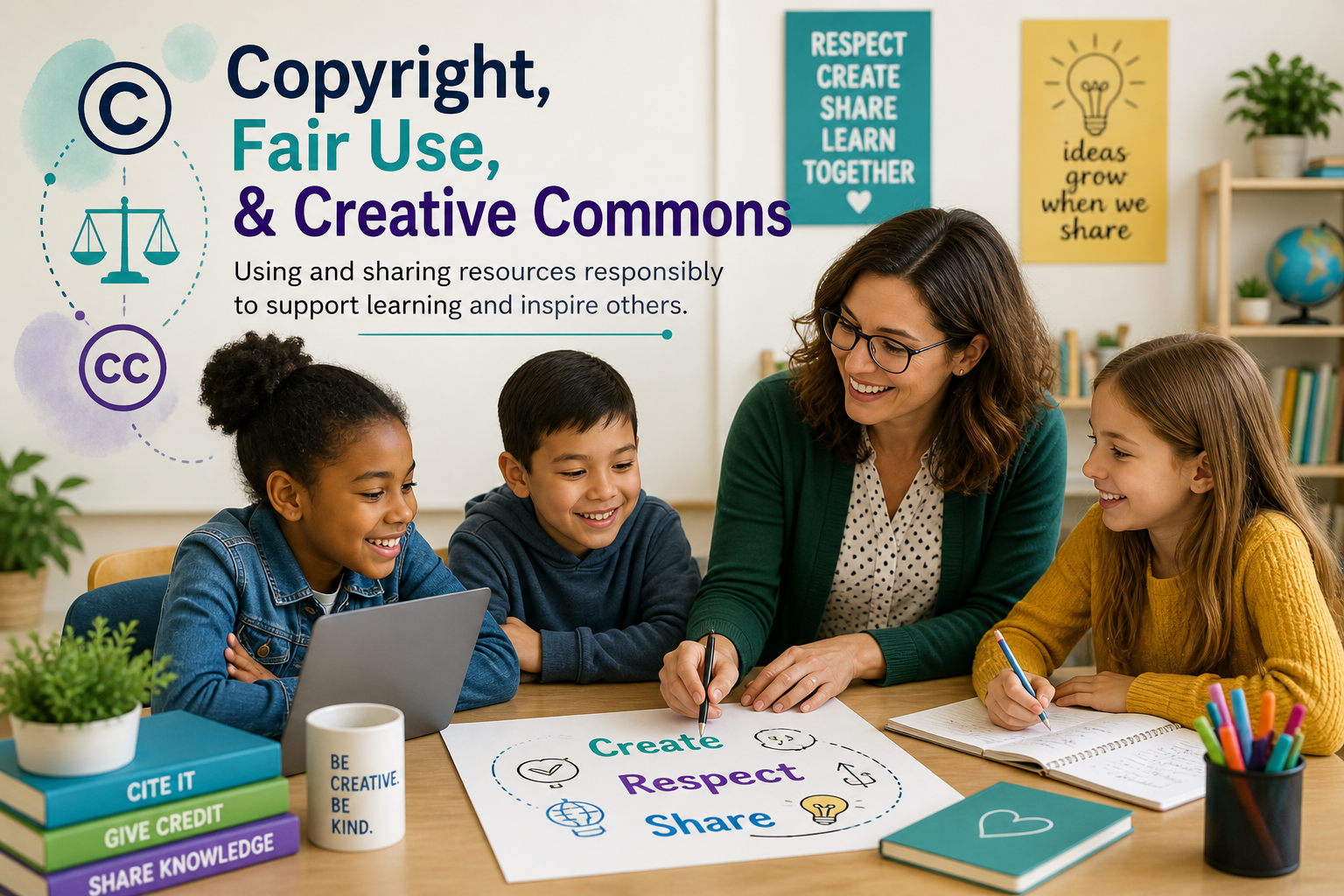
Understanding copyright, fair use, and Creative Commons is essential for educators in today’s digital world. As teachers, we constantly use online resources, images, and materials to support student learning. Knowing how to use these resources legally and ethically helps protect us while also modeling responsible digital behavior for our students.
Section 2: Fair Use
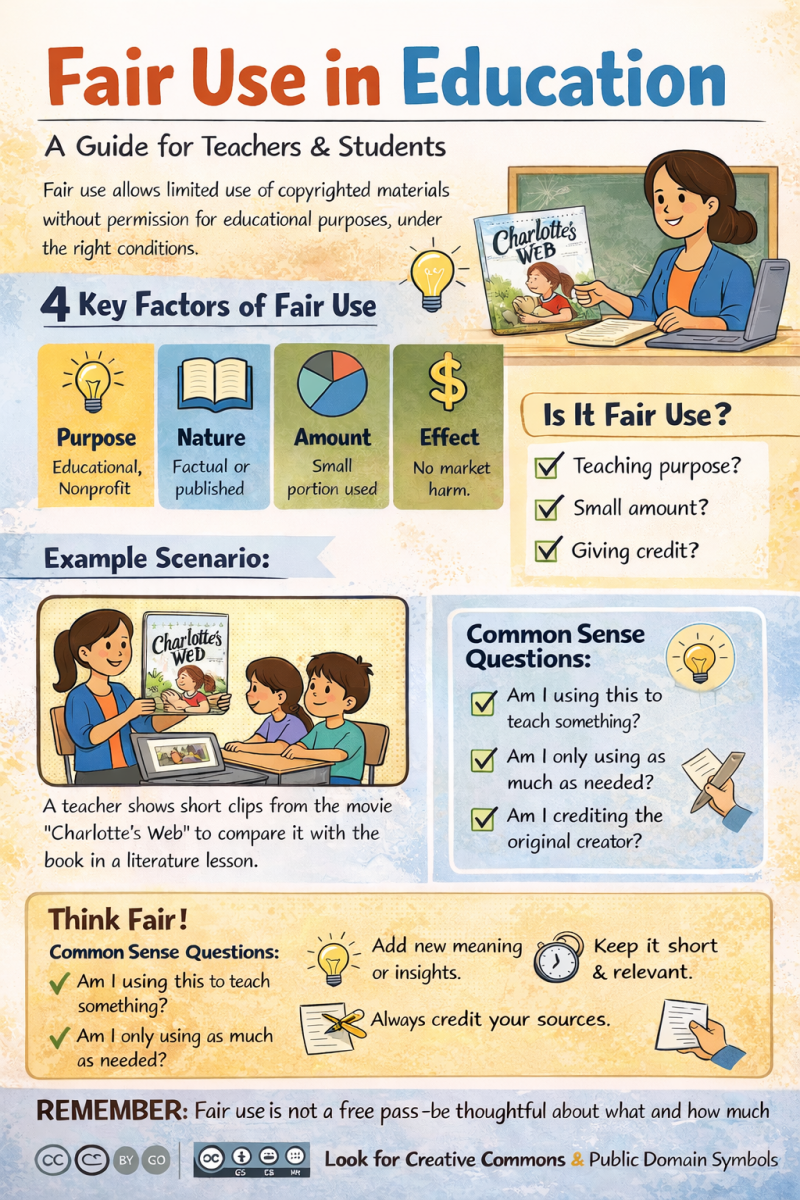
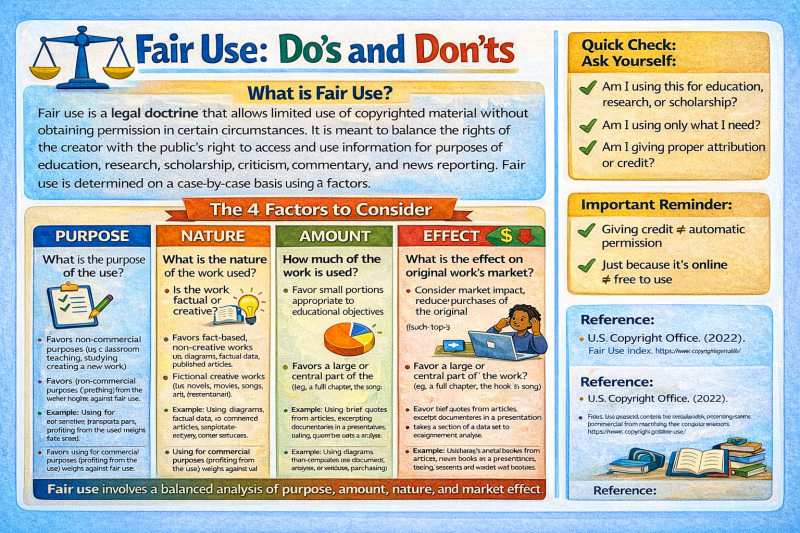
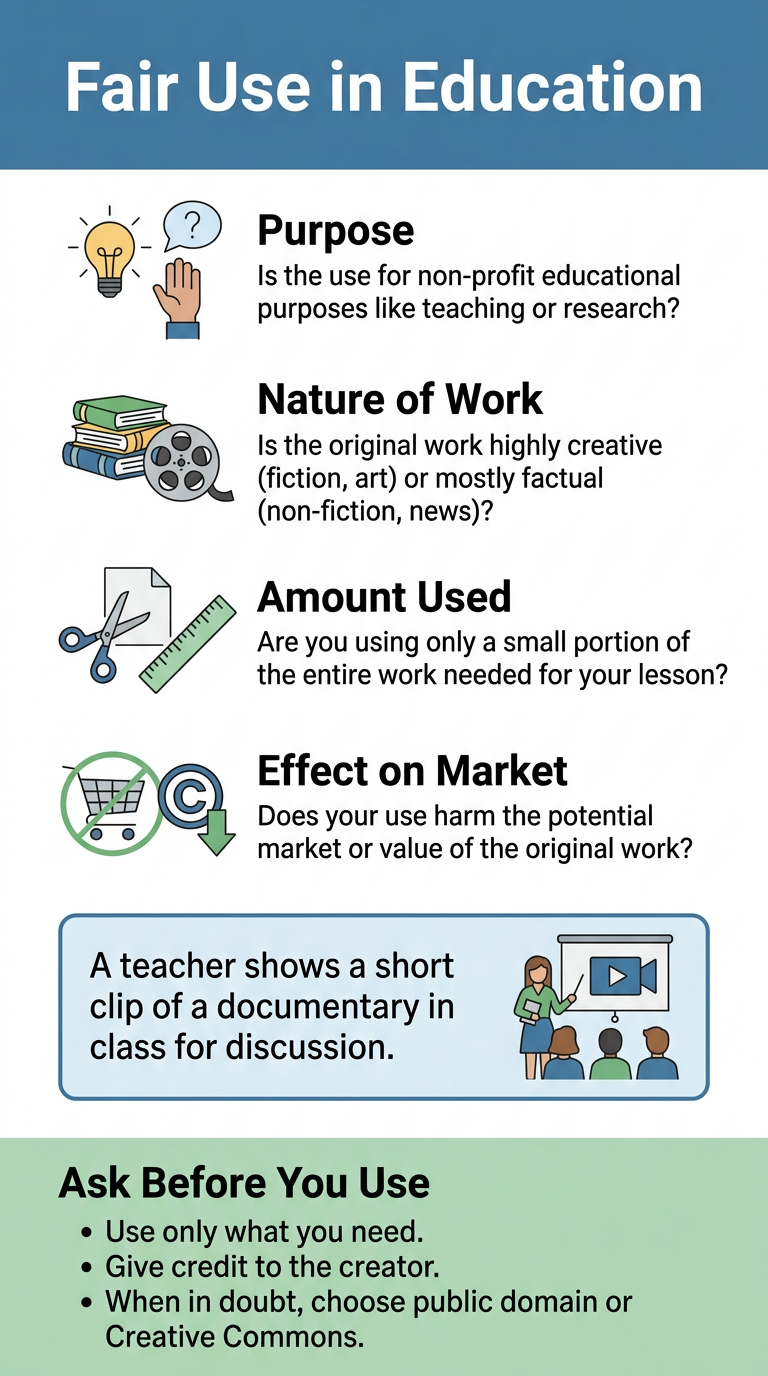
These infographics help explain the concept of fair use, which allows educators to use limited portions of copyrighted material for purposes such as teaching, commentary, and education. While fair use provides flexibility, it also has limits, and it is important to use materials responsibly.
Section 3: Creative Commons
|This work is licensed under a Creative Commons Attribution-NonCommercial 4.0 International License.
© 2026 Chasity Stringer
Creative Commons is a way for creators to share their work while still keeping some rights. It provides clear guidelines on how materials can be used, such as requiring credit, limiting commercial use, or allowing adaptations.
When someone visits this page, they should understand how Creative Commons works and how it applies to both using and sharing content. Not everything online is free to use, and giving proper credit is an important part of digital responsibility.
Section 4: Copyright Scenario
Understanding Copyright in the Classroom
This section is based on my project, “Voices of Change: A Digital Museum Exhibit,” where I analyzed how copyright applies to different types of media used in educational settings. As part of this work, I explored how images, videos, and written content can be used responsibly while still supporting meaningful learning experiences. This scenario highlights the importance of understanding copyright, fair use, and licensing when creating and sharing digital content.
As educators, it is important to understand the difference between using materials legally and unintentionally violating copyright laws. For example, if a teacher finds a worksheet or image online and distributes it to students without permission, this could be a copyright violation unless it falls under fair use.
Fair use allows limited use of copyrighted material for educational purposes, such as teaching, commentary, or criticism. However, there are limits. Copying entire textbooks or uploading full copyrighted materials for students would not be considered fair use.
To stay within legal and ethical boundaries, teachers should use resources that are labeled for reuse, properly cite all materials, and when possible, use Creative Commons–licensed content. This not only protects the teacher but also models responsible digital citizenship for students.
Through this project, I gained a deeper understanding of how to thoughtfully select and use digital resources in a way that is both effective and legally appropriate.
Create Your Own Website With Webador